Arda Öztaşkın · Essays
Smart Sustainability — essays on AI, judgment, and the climate era.When intelligence becomes abundant, judgment becomes the scarce resource.
The English writing of Arda Öztaşkın — independent essays, original concepts, and working frameworks on artificial intelligence, sustainability, institutional trust, and the future of human judgment.
The central question
How do societies keep judgment intact when technology accelerates faster than the institutions built to govern it — and faster than the habits of mind built to understand it?
This site is an attempt to answer that question in public: one essay, one concept, one framework at a time. The tools of analysis are named, not borrowed. The arguments are meant to be disagreed with.

COP31 · Antalya · 9–20 November 2026
COP31 Antalya: reading between the lines of the negotiation.
Verified essentials with their official sources — dates, venue, presidency, Blue and Green Zone access — plus the road-to-Antalya timeline, Türkiye's commitment architecture, and the analysis layer: finance architecture, the water agenda, and the gap between pledge and implementation.
Read the COP31 guide →Explore the work
Enter through an idea, not a category.
Five paths through the writing. Each opens onto the essays, concepts, frameworks, and source notes that live under the same question.
A technology that accelerates efficiency and material demand at the same time, and the accounting layer no institution is yet required to keep.
Essays(2)
Concepts(5)
The AI–Sustainability Paradox
The same technology that promises to accelerate sustainability transitions is also, at aggregate scale, one of their fastest-growing structural obstacles.
Efficiency Debt
The hidden liabilities — resource, cognitive, institutional — that accumulate when efficiency gains are booked without accounting for what they externalize.
Jevons Paradox
When a technology that uses a resource becomes more efficient, total consumption of that resource rises rather than falls.
Rebound Effect
Every unit of efficiency saving is refilled by new demand and new capacity, rather than banked as reduction.
Decoupling Thesis
The claim that economic growth can be separated from resource consumption — coherent in theory, unstable at exponential scale.
Signature concepts
A working vocabulary.
Original terms developed across the essays. Each links to the full entry and to the essays and frameworks that use it.
Epistemic Weaponization
The strategic manipulation of what societies know, doubt, trust, or ignore — treated as an instrument rather than a side-effect.
Read the entry →ConceptAlgorithmic Surrender
The routine, often unconscious transfer of judgment to automated systems whose criteria are opaque to the person deferring.
Read the entry →ConceptEfficiency Debt
The hidden liabilities — resource, cognitive, institutional — that accumulate when efficiency gains are booked without accounting for what they externalize.
Read the entry →ConceptCommitment Debt
Today's sustainability pledges piling into a stock of obligations for the future, whose enforcement remains uncertain.
Read the entry →ConceptThe AI–Sustainability Paradox
The same technology that promises to accelerate sustainability transitions is also, at aggregate scale, one of their fastest-growing structural obstacles.
Read the entry →Featured essay
Artificial intelligence is being positioned as a decisive climate tool: it will find efficiencies, model risk, orchestrate grids, and stretch material budgets. Some of this is real. But the framing conceals the actual constraint. Emissions curves do not turn because a model becomes more accurate; they turn because institutions choose different investments, tax different activities, and price different externalities. The essay argues that treating AI as a climate solution — rather than a climate instrument — misidentifies the problem, and by doing so risks displacing the political and institutional decisions that emissions reduction actually requires.
Read the essay →Frameworks
Tools for reading a claim.
Original models used across the essays — audits, tests, and accounting rules for arguments that usually escape scrutiny.
The AI–Sustainability Paradox
What does the net effect of a given AI system look like once its downstream gains and its infrastructure costs are booked against the same accounting boundary?
A framework for reading claims about AI's role in sustainability by forcing them onto a single, auditable ledger.
Read framework →FrameworkThe Washing Economy Test
Is this claim priced against the action it invokes, or is it priced against the appearance of that action?
A four-part check for reading corporate transformation claims — green, AI, judgment, upskill, narrative — against the cost of the action they name.
Read framework →FrameworkCommitment Debt Audit
If we treat every pledge as a promissory note, what is the outstanding balance — and who is the counterparty entitled to enforce it?
A framework for reading COP outcomes, corporate net-zero plans, and ESG pledges as an accumulating balance sheet rather than a series of announcements.
Read framework →Recent
From the notebook.
Free Will, or Algorithmic Surrender?
How do you define freedom — the existence of options, or ownership of the decision? Are we deciding, or are we being decided upon?
8 min · Read →SustainabilityGreenwashing Is Now a Matter of Proof, Not Morality
As of 1 August, an ordinary billboard reading 'eco-friendly' is no longer just a slogan in Türkiye — it is a legal claim that must travel with an auditable file behind it.
9 min · Read →AIJudgment, Dissolved by Artificial Charm
The greatest risk of the AI age is not that we lose information. It is that we lose judgment — and institutions can fall into the same trap as individuals.
7 min · Read →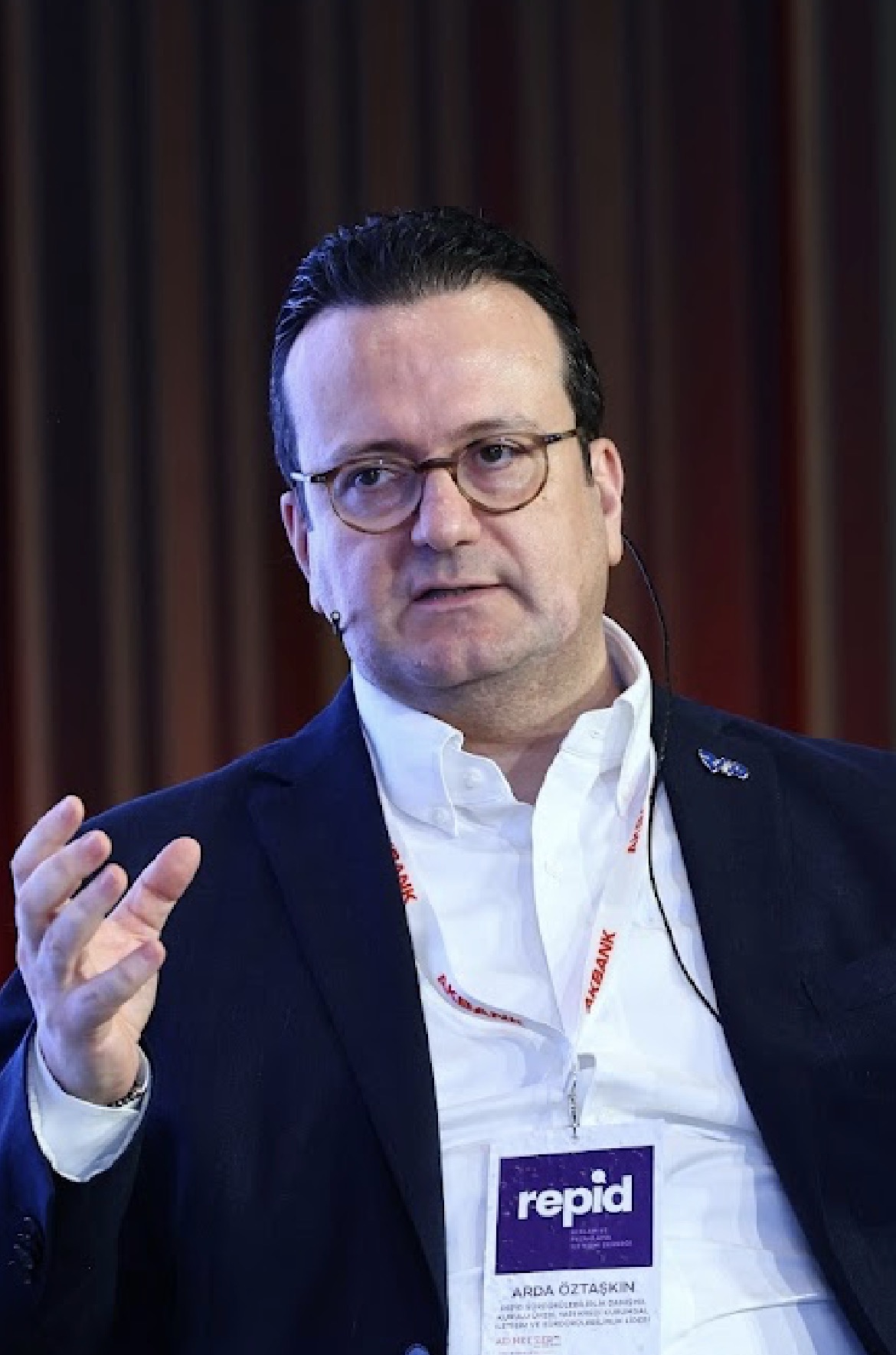
About the author
Arda Öztaşkın
Writer on artificial intelligence, sustainability, and the future of human judgment. Author of three books, including The Loneliness Economy. This site is the English edition of an independent, single-author publication — no institution, no editorial board, no house style but the argument.
The work sits between essay and philosophy of technology: closer in temperament to Aeon, Noema, and the long form of Paul Graham than to a research center or a product blog.
Monthly dispatch
One letter a month. Nothing else.
A new essay, a concept worth naming, and a short reading of the reports that matter — sent once a month. No tracking beacons, no cross-posts, no growth loops. You can leave at any time.